
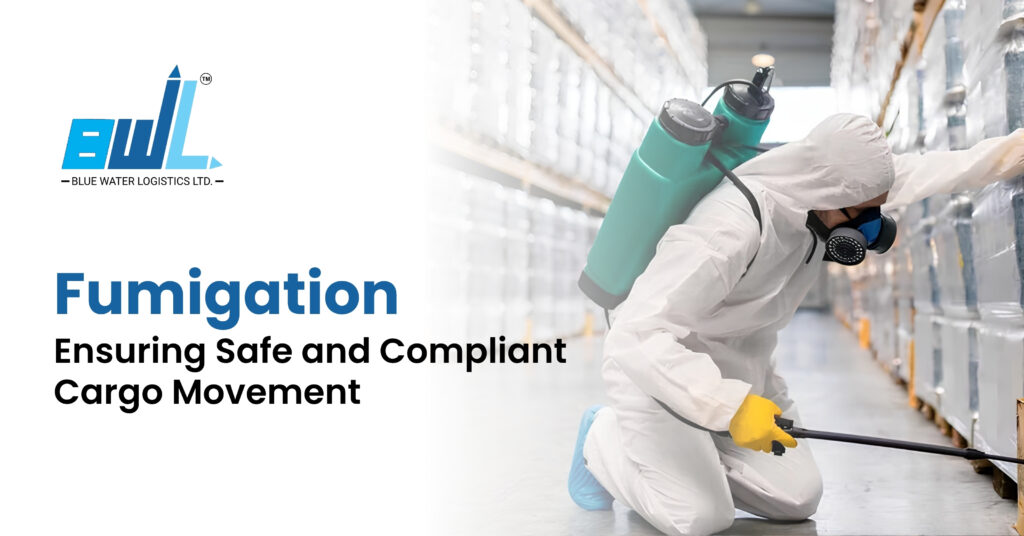
Global trade involves the movement of goods across borders, climates, and ecosystems. While logistics focuses on efficiency and timely delivery, ensuring that cargo is free from pests and contaminants is equally important. This is where fumigation plays a critical role in international shipping.
At Blue Water Logistics Limited, fumigation is an essential part of preparing cargo for export, ensuring compliance with global phytosanitary standards and protecting shipments from potential risks during transit.
Fumigation is the process of using chemical gases or heat treatment to eliminate pests, insects, termites, and harmful microorganisms from cargo. It is especially important for shipments involving wooden packaging materials such as pallets, crates, and dunnage, as well as agricultural products.
This process helps prevent the spread of invasive species across countries and ensures that cargo meets international import regulations.
Fumigation is not just a regulatory requirement—it is a safeguard for both cargo and supply chains.
Wooden packaging and certain goods can carry pests that may damage cargo or spread to new environments. Fumigation eliminates these risks before shipment.
Many countries require fumigation certificates under standards such as ISPM-15 for wooden packaging. Non-compliance can lead to shipment rejection or penalties.
By eliminating contaminants, fumigation helps maintain the integrity and quality of goods during transit.
Proper fumigation reduces the chances of customs hold-ups, re-treatment, or shipment returns.
It ensures cargo moves seamlessly across borders without regulatory complications.
Different types of fumigation methods are used depending on the nature of cargo and destination requirements.
Involves the use of gases such as methyl bromide or phosphine to eliminate pests effectively.
Uses controlled heat to kill pests in wooden packaging, commonly used as an alternative to chemical fumigation.
Treats entire containers to ensure all contents are pest-free before export.
Fumigation is widely used across industries where cargo is susceptible to contamination or governed by strict import regulations.
Export packaging is designed to protect goods from damage, moisture, and external conditions. When combined with fumigation, it ensures both physical protection and biological safety of cargo.
Properly fumigated packaging:
At Blue Water Logistics Limited, fumigation is carried out as part of a comprehensive logistics solution. Our approach ensures that every shipment meets the required safety and regulatory standards.
Our focus is on ensuring that cargo is not only transported efficiently but also meets all compliance requirements for global trade.
With increasing awareness of environmental impact and stricter regulations, the fumigation process is evolving.
These advancements are making fumigation more sustainable, efficient, and aligned with global trade practices.
Fumigation is a vital component of logistics that ensures cargo safety, regulatory compliance, and smooth international movement. By eliminating risks associated with pests and contaminants, it protects both shipments and supply chains.
For businesses involved in global trade, incorporating proper fumigation practices is essential for avoiding delays and ensuring seamless operations.
At Blue Water Logistics Limited, we combine expertise and operational efficiency to deliver end-to-end logistics solutions that prioritize both compliance and reliability.
BLUE WATER LOGISTICS LIMITED
(Formerly known as Blue Water Logistics Private Limited)
CIN No: L63030TG2022PLC165815
H NO.8-2-270/B/1/2, Block-3, 4th Floor Uptown Banjara, Road No.3, Banjara Hills, Hyderabad, Telangana, India, 500034