
Shipping Less Than a Full Container? Why Consolidation Makes Sense for Growing Exporters
Shipping Less Than a Full Container? Why Consolidation Makes Sense for Growing Exporters
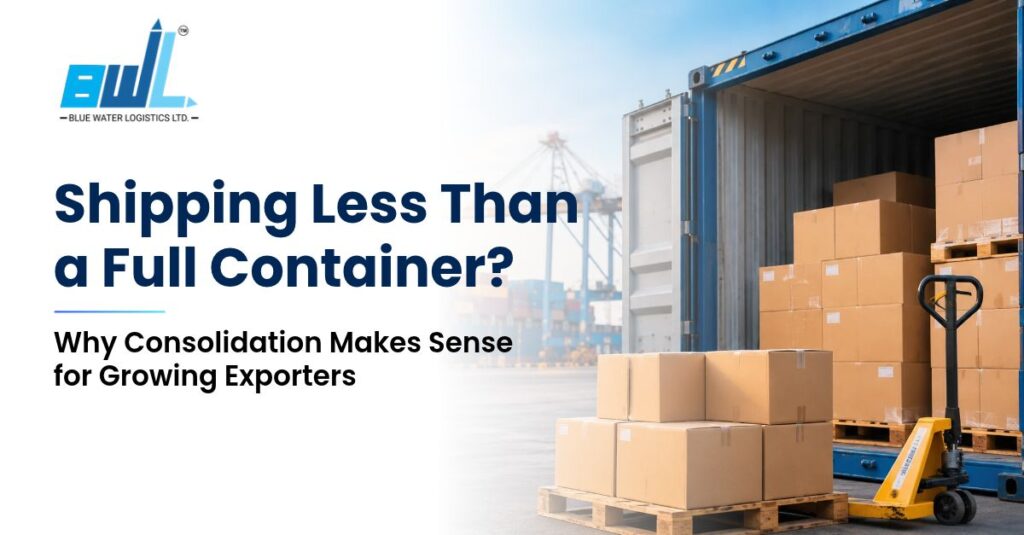
Every exporter reaches a point where orders are growing but not yet large enough to fill a container on a regular basis. Waiting to build a full load delays delivery. Booking a full container for partial cargo raises the cost of every unit shipped. Cargo consolidation offers a practical way through.
What is cargo consolidation?
Cargo consolidation is the practice of combining shipments from several exporters into a single container headed for the same destination or region. Each exporter’s goods are documented and tracked separately, while the freight forwarder manages the container as a whole. At the destination port, the container is opened and each consignment is released to its owner.
This is the model behind LCL, or less than container load, shipping.
Why it suits growing exporters
Smaller and mid sized exporters often work with shipments that sit between a courier parcel and a full container. Consolidation fits that gap well.
Pay for the space you use. Freight cost is based on the volume or weight your cargo occupies, so you are not paying for an empty container.
Ship more often. Instead of holding stock until a full container is ready, you can dispatch smaller lots on a regular schedule. This helps buyers who prefer frequent, smaller replenishments.
Keep cash moving. Faster dispatch means faster invoicing and a shorter wait for payment.
Test new markets with less risk. A first order to a new buyer or country does not need to be a large commitment.
Where consolidation needs careful handling
Shared shipments involve more touchpoints than a dedicated container, so planning matters.
- Packaging: Cargo will be handled at the consolidation warehouse and again at destination. Sturdy, well labelled packing reduces the risk of damage.
- Documentation: Each consignment needs accurate invoices, packing lists and declarations. Errors on one shipment can slow clearance for that cargo.
- Cut off timings: Consolidation depends on cargo arriving at the warehouse by a fixed date. Missing it may mean waiting for the next sailing.
- Cargo compatibility: Certain goods cannot share a container, such as hazardous items or cargo with strong odours. Your forwarder should advise on this early.
Choosing the right consolidation partner
The quality of a consolidation service depends largely on the forwarder behind it. A few things are worth checking:
- Regular sailing schedules to your key destinations
- Warehousing and cargo handling at the origin port
- Clear visibility on shipment status from pickup to delivery
- Support with customs clearance and documentation
- Transparent pricing, with all charges explained upfront
When to move to full containers
Consolidation is not a permanent choice. As volumes to a particular market grow, a full container load (FCL) may become more economical. A good rule of thumb is to review your numbers when your regular shipments approach half a container or more. Your forwarder can compare both options for you based on actual cost and transit time.
Moving with a partner who grows with you
Growth in exports rarely follows a straight line, and your logistics should be flexible enough to keep up. At Blue Water Logistics Limited, our consolidation services help exporters ship smaller volumes reliably, with proper documentation support and clear communication at every stage.
Talk to our team → bwl.co.in/contact-us