
Fumigation in Logistics: Ensuring Safe and Compliant Cargo Movement
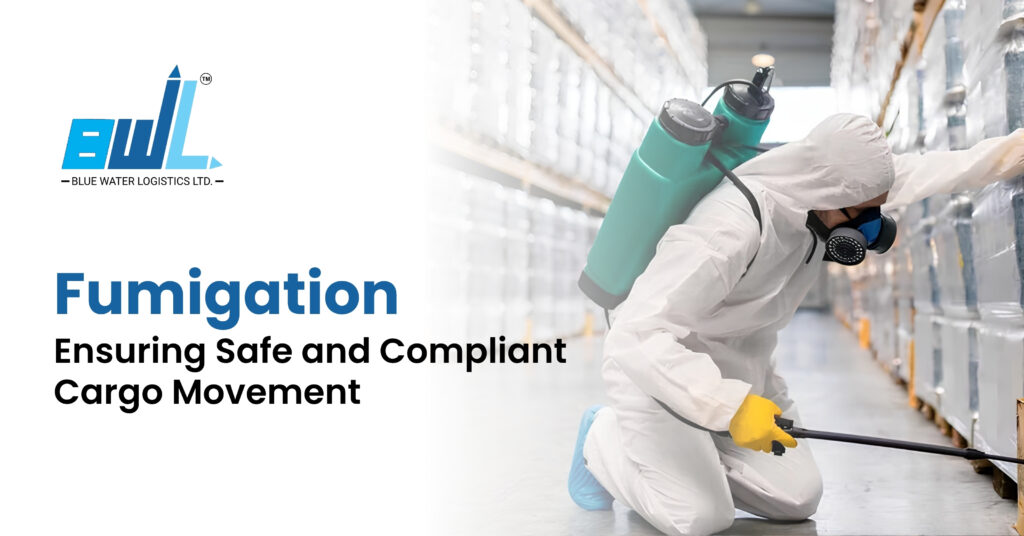
Fumigation in Logistics: Ensuring Safe and Compliant Cargo Movement Fumigation in Logistics: Ensuring Safe and Compliant Cargo Movement Global trade involves the movement of goods across borders, climates, and ecosystems. While logistics focuses on efficiency and timely delivery, ensuring that cargo is free from pests and contaminants is equally important. This is where fumigation plays a critical role in international shipping. At Blue Water Logistics Limited, fumigation is an essential part of preparing cargo for export, ensuring compliance with global phytosanitary standards and protecting shipments from potential risks during transit. What is Fumigation in Logistics? Fumigation is the process of using chemical gases or heat treatment to eliminate pests, insects, termites, and harmful microorganisms from cargo. It is especially important for shipments involving wooden packaging materials such as pallets, crates, and dunnage, as well as agricultural products. This process helps prevent the spread of invasive species across countries and ensures that cargo meets international import regulations. Why is Fumigation Important? Fumigation is not just a regulatory requirement—it is a safeguard for both cargo and supply chains. Prevents Pest Infestation Wooden packaging and certain goods can carry pests that may damage cargo or spread to new environments. Fumigation eliminates these risks before shipment. Ensures Regulatory Compliance Many countries require fumigation certificates under standards such as ISPM-15 for wooden packaging. Non-compliance can lead to shipment rejection or penalties. Protects Cargo Quality By eliminating contaminants, fumigation helps maintain the integrity and quality of goods during transit. Avoids Delays and Additional Costs Proper fumigation reduces the chances of customs hold-ups, re-treatment, or shipment returns. Supports Smooth International Trade It ensures cargo moves seamlessly across borders without regulatory complications. Types of Fumigation Methods Different types of fumigation methods are used depending on the nature of cargo and destination requirements. Chemical Fumigation Involves the use of gases such as methyl bromide or phosphine to eliminate pests effectively. Heat Treatment Uses controlled heat to kill pests in wooden packaging, commonly used as an alternative to chemical fumigation. Container Fumigation Treats entire containers to ensure all contents are pest-free before export. Industries That Require Fumigation Fumigation is widely used across industries where cargo is susceptible to contamination or governed by strict import regulations. Agriculture and food products Wood and timber exports Pharmaceuticals and chemicals Industrial goods using wooden packaging Role of Fumigation in Export Packaging Export packaging is designed to protect goods from damage, moisture, and external conditions. When combined with fumigation, it ensures both physical protection and biological safety of cargo. Properly fumigated packaging: Meets international compliance standards Reduces risk during long transit periods Enhances reliability of shipments How Blue Water Logistics Ensures Effective Fumigation At Blue Water Logistics Limited, fumigation is carried out as part of a comprehensive logistics solution. Our approach ensures that every shipment meets the required safety and regulatory standards. Coordination with certified fumigation service providers Compliance with international guidelines and documentation Integration with export packaging and cargo handling Timely execution to avoid delays in shipment schedules Our focus is on ensuring that cargo is not only transported efficiently but also meets all compliance requirements for global trade. The Future of Fumigation in Logistics With increasing awareness of environmental impact and stricter regulations, the fumigation process is evolving. Adoption of eco-friendly fumigation methods Increased use of heat treatment alternatives Improved monitoring and documentation systems Integration with smart logistics processes These advancements are making fumigation more sustainable, efficient, and aligned with global trade practices. Conclusion Fumigation is a vital component of logistics that ensures cargo safety, regulatory compliance, and smooth international movement. By eliminating risks associated with pests and contaminants, it protects both shipments and supply chains. For businesses involved in global trade, incorporating proper fumigation practices is essential for avoiding delays and ensuring seamless operations. At Blue Water Logistics Limited, we combine expertise and operational efficiency to deliver end-to-end logistics solutions that prioritize both compliance and reliability. Get Started with BWL Today! Enquire Now
Trucking Services: The Essential Link for Seamless Cargo Movement
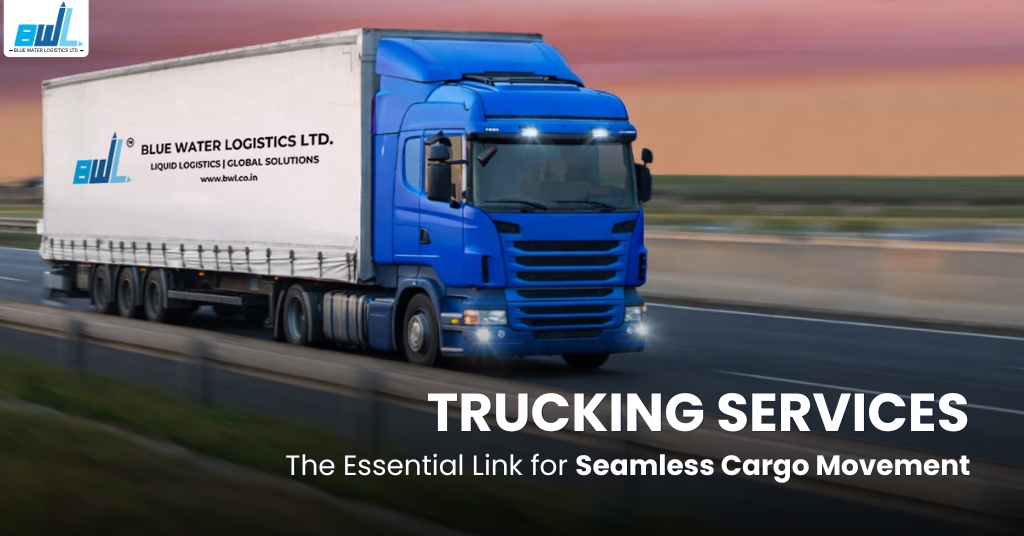
Trucking Services: The Essential Link for Seamless Cargo Movement Trucking Services: The Essential Link for Seamless Cargo Movement Global trade depends on the smooth movement of goods across regions and industries. While air and ocean freight handle long-distance transportation, the role of trucking is equally critical in ensuring cargo reaches its final destination efficiently. This is where trucking services become a vital part of modern logistics. At Blue Water Logistics Limited, we understand the importance of reliable and timely cargo movement. Trucking provides a flexible and efficient solution for transporting goods across cities, states, and international borders while maintaining consistency and control throughout the supply chain. What Are Trucking Services? Trucking services refer to the transportation of goods using road-based vehicles such as trucks and trailers. These services form the backbone of logistics by connecting ports, warehouses, manufacturing units, and end customers. Trucking plays a key role in both domestic and international logistics by enabling first-mile pickup and last-mile delivery. Unlike other modes of transport, it offers direct, door-to-door movement, reducing the need for multiple handling stages. Key Features of Trucking Services Trucking is designed to provide flexibility, accessibility, and efficiency across supply chains. Its structure allows businesses to move goods reliably across various distances. 1. Flexible Transportation Trucking allows cargo to be transported across urban, rural, and remote areas, offering unmatched reach compared to other logistics modes. 2. Door-to-Door Delivery Unlike air or ocean freight, trucking ensures goods are picked up and delivered directly to the required location, minimizing handling points. 3. Scalable Capacity From small consignments to full truckloads, trucking services can be customized based on shipment size and requirements. 4. Integration with Multimodal Logistics Trucking seamlessly connects with air, rail, and ocean transport, ensuring smooth cargo transitions across different stages of the supply chain. 5. Real-Time Monitoring Modern trucking solutions incorporate tracking systems that provide visibility and control over shipments throughout transit. Advantages of Trucking in Logistics Trucking services offer several advantages that make them indispensable in logistics operations. Improved Accessibility Road networks allow goods to reach locations that may not be accessible by rail, air, or sea, ensuring wider connectivity. Faster Transit for Short Distances For regional and domestic deliveries, trucking often provides faster transit times compared to other modes. Cost Efficiency Trucking is a cost-effective solution, especially for short to medium distances, reducing overall logistics expenses. Reduced Handling Direct transportation minimizes cargo handling, lowering the risk of damage or delays. Operational Flexibility Routes, schedules, and delivery timelines can be adjusted based on business needs, providing greater control over logistics planning. Industries That Depend on Trucking Trucking services support a wide range of industries that require efficient cargo movement. Manufacturing and Industrial Goods Factories rely on trucking for transporting raw materials and finished goods between production units and distribution centers. Chemical and Liquid Logistics Specialized trucking solutions are used for transporting chemicals and liquid cargo, ensuring safety and compliance. FMCG and Retail Fast-moving consumer goods require timely delivery, making trucking essential for maintaining inventory flow. E-commerce and Distribution With growing demand for quick deliveries, trucking plays a crucial role in last-mile logistics for e-commerce businesses. The Role of Logistics Expertise in Trucking While trucking provides the physical movement of goods, effective logistics management ensures efficiency and reliability. From route planning and fleet coordination to compliance and documentation, every stage requires professional execution. At Blue Water Logistics Limited, we offer integrated trucking solutions designed to ensure smooth cargo movement. Our network, fleet management capabilities, and operational expertise enable us to handle shipments with precision and reliability. Our team ensures timely deliveries, optimized routes, and seamless coordination across supply chains, helping businesses maintain efficiency in their logistics operations. The Future of Trucking As logistics continues to evolve, trucking is becoming more advanced with the adoption of new technologies. Smart fleet management systems Real-time tracking and visibility Route optimization using data analytics Sustainable and fuel-efficient vehicles These developments are enhancing the efficiency, transparency, and sustainability of trucking services. Conclusion Trucking services remain a critical component of logistics, enabling efficient cargo movement across every stage of the supply chain. Their flexibility, accessibility, and cost-effectiveness make them indispensable for businesses across industries. For companies seeking reliable transportation solutions, partnering with an experienced logistics provider ensures seamless operations and consistent performance. With its expertise and commitment to service excellence, Blue Water Logistics Limited continues to support businesses with dependable trucking solutions. Get Started with BWL Today! Enquire Now
Chartering – Customized Vessel and Aircraft Charter Solutions
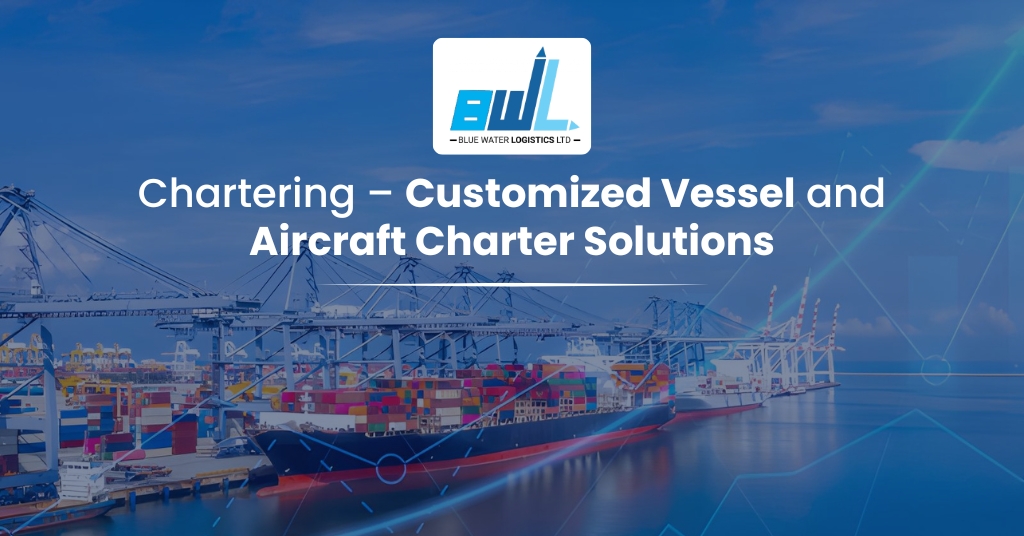
Chartering – Customized Vessel and Aircraft Charter Solutions Chartering – Customized Vessel and Aircraft Charter Solutions In today’s fast-moving global trade environment, businesses often encounter cargo requirements that cannot be accommodated through conventional shipping or air freight schedules. Oversized cargo, urgent shipments, project logistics, or cargo destined for remote locations frequently require specialized transport solutions. This is where chartering services play a critical role. Chartering offers businesses the flexibility to secure an entire vessel or aircraft dedicated exclusively to their cargo, ensuring efficient, secure, and timely transportation. By providing customized transport solutions, chartering enables companies to move complex shipments across international markets without the limitations of regular shipping schedules. Understanding Chartering in Logistics Chartering refers to the process of hiring a vessel or aircraft for the transportation of cargo. Unlike standard shipping arrangements where cargo space is shared with other consignments, chartering allows organizations to utilize the entire capacity of a vessel or aircraft for their specific shipment. This approach is particularly valuable when transporting large volumes of cargo, heavy equipment, project materials, or time-sensitive shipments. By arranging dedicated transport, businesses gain greater control over routing, scheduling, and cargo handling. Chartering solutions are commonly used in industries such as energy, construction, manufacturing, mining, oil and gas, and infrastructure development, where logistics requirements are often complex and specialized. Types of Chartering Services Chartering services typically fall into two primary categories: vessel chartering and aircraft chartering. Vessel Chartering Vessel chartering is widely used for transporting large quantities of cargo via sea routes. It is particularly suitable for heavy machinery, industrial equipment, bulk cargo, and project materials that require significant cargo space. Depending on the cargo requirements, companies may choose different types of vessel charter arrangements, including: Full vessel charter, where the entire ship is dedicated to one client’s cargo. Part cargo charter, where a portion of the vessel is reserved for a specific shipment. Voyage charter, which is arranged for a specific route and cargo movement. Vessel chartering offers businesses the flexibility to transport cargo that may not fit within standard containerized shipping systems. Aircraft Chartering For time-critical shipments or cargo that requires rapid delivery, aircraft chartering provides a highly efficient solution. Dedicated cargo aircraft can transport urgent shipments directly between locations without the delays associated with scheduled commercial flights. Aircraft chartering is commonly used for: Urgent industrial equipment Humanitarian relief supplies Medical equipment High-value cargo Time-sensitive manufacturing components With aircraft chartering, businesses benefit from speed, reliability, and customized routing, ensuring that critical cargo reaches its destination on time. Advantages of Chartering Solutions Chartering services provide several advantages for businesses dealing with complex logistics requirements. Flexibility in Transportation One of the key benefits of chartering is flexibility. Companies can choose vessels or aircraft that match the specific size, weight, and nature of their cargo. This allows businesses to transport oversized or specialized shipments without restrictions. Faster Delivery for Critical Cargo Aircraft chartering, in particular, enables rapid transportation of urgent shipments. When production timelines or operational requirements demand immediate delivery, chartered aircraft provide the speed needed to minimize delays. Direct Routing Chartered vessels and aircraft can often travel directly between origin and destination ports or airports. This reduces transit times and minimizes the risk of cargo handling during intermediate stops. Enhanced Cargo Safety Since chartered transport is dedicated to a single shipment or client, cargo handling processes can be more carefully managed. This helps ensure safe transportation, especially for delicate or high-value goods. Ideal for Project Logistics Large infrastructure projects frequently require the transportation of heavy machinery, turbines, pipelines, or construction equipment. Chartering allows these oversized components to be moved efficiently without dismantling or complex packaging. Industries That Benefit from Chartering Many industries rely on chartering services to support their logistics operations. Some of the key sectors include: Oil and Gas Industry – Transport of drilling equipment, pipelines, and specialized machinery. Construction and Infrastructure – Movement of heavy project cargo such as turbines, cranes, and structural components. Manufacturing – Delivery of oversized machinery or urgent production components. Energy Sector – Transport of wind turbine blades, generators, and other large equipment. Humanitarian and Relief Operations – Rapid delivery of essential supplies during emergencies. By providing tailored logistics solutions, chartering services support these industries in managing complex transportation challenges. The Role of Logistics Expertise Chartering requires careful planning and coordination. Selecting the right vessel or aircraft, evaluating cargo specifications, securing necessary permits, and coordinating loading and unloading operations all play a crucial role in ensuring successful transportation. Experienced logistics providers manage these complexities by coordinating with vessel owners, airline operators, port authorities, and ground handling teams. This ensures that cargo is transported efficiently while complying with all regulatory and safety requirements. Customized Chartering Solutions with Blue Water Logistics At Blue Water Logistics, we understand that no two shipments are the same. Our chartering services are designed to provide flexible, reliable, and customized solutions for businesses with specialized cargo requirements. Through our global logistics network and industry expertise, we arrange dedicated vessel and aircraft charters to transport cargo safely and efficiently across international markets. From heavy project cargo to urgent shipments, our team ensures seamless coordination from origin to destination. By combining strategic planning, industry partnerships, and operational expertise, Blue Water Logistics delivers chartering solutions that meet the most demanding logistics challenges. Conclusion Chartering plays a vital role in modern logistics by enabling businesses to move cargo that exceeds the limitations of conventional shipping and air freight services. With the ability to customize transportation solutions, companies gain greater flexibility, faster delivery times, and enhanced cargo security. As global trade continues to expand and logistics requirements become more complex, chartering services will remain an essential component of efficient supply chain management. With tailored vessel and aircraft charter solutions, businesses can ensure that even the most challenging shipments reach their destination safely, efficiently, and on schedule. Get Started with BWL Today! Enquire Now
Safe Liquid Transport with ISO Tanks
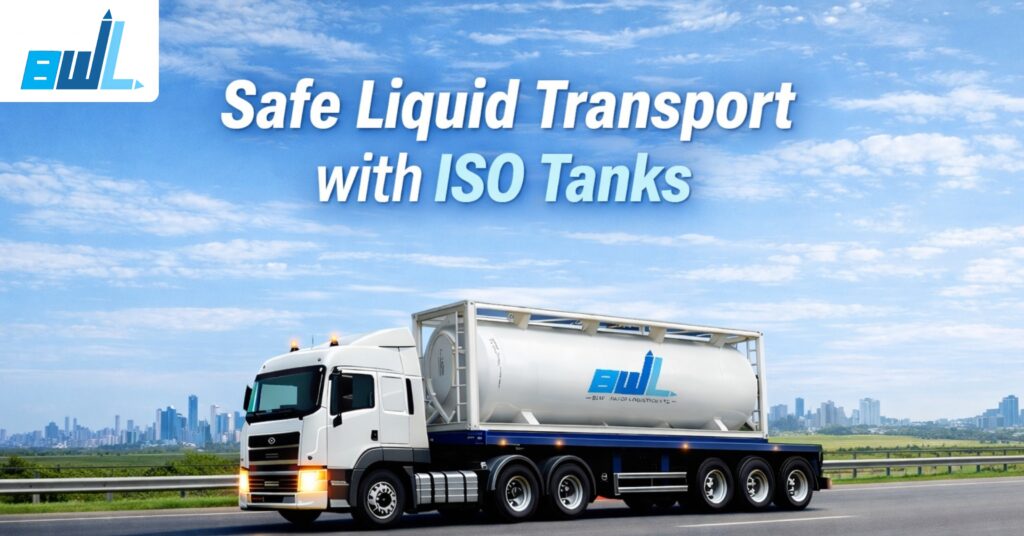
ISO Tank Containers: The Smart Solution for Safe and Efficient Liquid Transportation Global trade relies heavily on the efficient movement of goods across continents. While dry cargo often travels in standard shipping containers, transporting liquids requires specialized solutions that ensure safety, quality, and efficiency. This is where ISO Tank Containers play a crucial role in modern logistics. At Blue Water Logistics Limited, we understand the growing demand for reliable liquid transportation. ISO tank containers provide a highly secure and cost-effective solution for moving bulk liquids across international markets while maintaining strict safety and quality standards. What Are ISO Tank Containers? ISO Tank Containers, commonly known as ISO Tanks, are stainless steel tanks mounted within a protective steel frame that conforms to the standards set by the International Organization for Standardization (ISO). The standardized frame ensures that these containers can be easily handled across multiple modes of transport, including ships, trucks, and railways. These tanks are primarily designed for transporting bulk liquids such as chemicals, food-grade liquids, pharmaceuticals, oils, and hazardous materials. Their robust structure ensures safe transportation even over long distances and through complex supply chains. Unlike traditional drum or flexi-bag shipments, ISO tanks allow bulk liquid cargo to be transported in a single, sealed unit, minimizing handling and reducing the risk of contamination or leakage. Key Features of ISO Tank Containers ISO tanks are engineered to meet the highest international safety and quality standards. Their design and functionality make them one of the most reliable options for transporting liquid cargo globally. 1. Standardized Design ISO tank containers follow standardized dimensions, typically matching the size of a 20-foot container. This allows them to seamlessly integrate with global intermodal transport systems. 2. High Capacity Most ISO tanks can carry between 21,000 to 26,000 liters of liquid cargo, significantly higher than traditional packaging methods such as drums or intermediate bulk containers (IBCs). 3. Durable Construction The tank itself is usually made from high-grade stainless steel, which is resistant to corrosion and chemical reactions. It is enclosed within a strong carbon steel frame that provides structural protection during handling and transit. 4. Safety and Compliance ISO tanks are built according to strict international regulations, including pressure testing and safety certifications. This ensures safe transportation of hazardous and non-hazardous liquids. 5. Temperature Control Certain ISO tanks are equipped with insulation or heating systems that help maintain the required temperature of sensitive cargo such as edible oils or specialty chemicals. Advantages of Using ISO Tank Containers ISO tanks have transformed the logistics industry by offering numerous advantages over traditional liquid transport methods. Improved Safety Transporting liquids in drums or smaller containers increases the risk of leakage, contamination, and handling accidents. ISO tanks significantly reduce these risks because the cargo is loaded once and sealed until delivery. Cost Efficiency By transporting larger volumes in a single container, ISO tanks reduce packaging costs, handling charges, and overall transportation expenses. Environmental Sustainability ISO tanks are reusable and designed for multiple trips, making them an environmentally responsible alternative to single-use packaging materials. Reduced Cargo Handling Since the cargo remains sealed throughout the journey, there is minimal product loss or contamination risk. Global Intermodal Compatibility ISO tanks can easily move between trucks, rail networks, and ocean vessels without repackaging the cargo. This makes them ideal for international supply chains. Industries That Depend on ISO Tank Containers ISO tank containers support several industries that rely on bulk liquid transportation. Chemical Industry Chemicals represent one of the largest segments using ISO tanks. These containers ensure safe transport of hazardous and non-hazardous chemical liquids across long distances. Food and Beverage Industry Food-grade ISO tanks are commonly used for transporting edible oils, fruit juices, liquid sweeteners, and dairy products while maintaining hygiene and quality standards. Pharmaceutical Sector The pharmaceutical industry often requires controlled environments for transporting sensitive liquid ingredients. ISO tanks help maintain strict compliance with safety and quality regulations. Petrochemicals and Industrial Liquids ISO tanks are also widely used for transporting fuels, lubricants, and other industrial liquids that require secure containment. The Role of Logistics Expertise in ISO Tank Transportation While ISO tanks provide the physical infrastructure for transporting liquids, efficient logistics management is equally important. From documentation and regulatory compliance to route planning and cargo monitoring, every stage of the shipment requires professional handling. At Blue Water Logistics Limited, we provide comprehensive logistics solutions designed to ensure seamless ISO tank transportation. Our expertise in global freight forwarding, supply chain coordination, and regulatory compliance enables us to handle complex liquid cargo shipments with precision. Our team ensures that every shipment is managed with the highest level of safety, efficiency, and reliability, helping businesses move bulk liquids across global markets without disruption. The Future of Liquid Logistics As global industries expand and international trade continues to grow, the demand for efficient liquid transportation solutions will only increase. ISO tank containers are expected to play an even greater role in the future of logistics due to their safety, sustainability, and operational efficiency. Businesses looking to optimize their supply chains are increasingly turning to ISO tanks as a reliable alternative to traditional liquid packaging methods. Their ability to streamline transportation while maintaining product integrity makes them an essential component of modern logistics networks. Conclusion ISO tank containers have revolutionized the transportation of bulk liquids by providing a safe, efficient, and environmentally responsible solution. Their standardized design, high capacity, and compatibility with intermodal transport systems make them indispensable for global trade. For companies handling liquid cargo, partnering with an experienced logistics provider is essential to ensure seamless operations and compliance with international regulations. With its commitment to reliability and global connectivity, Blue Water Logistics Limited continues to support businesses with dependable logistics solutions that keep supply chains moving smoothly. Get Started with BWL Today! Enquire Now
What Door-to-Door Logistics Really Means for Importers and Exporters
What Door-to-Door Logistics Really Means for Importers and Exporters In today’s global trade environment, businesses are increasingly looking for logistics solutions that offer simplicity, visibility, and reliability. As supply chains become more complex and international shipping regulations continue to evolve, managing multiple service providers across different stages of transportation can lead to delays, errors, and increased costs. This is where door-to-door logistics plays a crucial role. While many importers and exporters are familiar with the term, the true meaning of door-to-door logistics is often misunderstood. It is more than just transportation from one location to another—it represents a fully integrated, end-to-end logistics solution designed to simplify global cargo movement. Understanding Door-to-Door Logistics Door-to-door logistics refers to a comprehensive service where a single logistics partner manages the entire journey of cargo—from the seller’s premises to the buyer’s final destination. This includes pickup, documentation, customs clearance, multimodal transportation, warehousing (if required), and last-mile delivery. Instead of coordinating separate service providers for trucking, freight forwarding, customs, and delivery, businesses benefit from a unified solution. This approach ensures seamless coordination across every stage of the shipment, reducing complexity and improving operational efficiency. Why Door-to-Door Logistics Is Becoming Essential As businesses expand into new markets, the need for simplified logistics has grown significantly. Traditional shipping models often require companies to manage different stakeholders at each stage of the process. This increases the risk of miscommunication, delays, and compliance challenges. Door-to-door logistics eliminates these risks by offering: A single point of accountability Streamlined communication Better coordination across transport modes Greater visibility throughout the shipment lifecycle For importers and exporters, this translates into smoother operations and improved predictability. Key Components of Door-to-Door Logistics 1. Cargo Pickup and First-Mile Connectivity The process begins with pickup from the shipper’s facility. Efficient first-mile transportation ensures cargo reaches the port, airport, or consolidation hub safely and on time. 2. Documentation and Compliance Global trade involves extensive documentation, including invoices, packing lists, certificates, and regulatory approvals. A reliable logistics partner manages these requirements to ensure compliance and reduce delays. 3. Customs Clearance One of the most critical stages in international shipping is customs clearance. Door-to-door logistics includes expert handling of import and export procedures, duty classification, and regulatory compliance. 4. Multimodal Freight Movement Depending on the destination and urgency, shipments may move via sea, air, or road freight. Door-to-door services integrate these transport modes for cost efficiency and flexibility. 5. Last-Mile Delivery The final stage ensures cargo reaches the buyer’s premises safely and within agreed timelines. This step is crucial in maintaining customer satisfaction and supply chain continuity. The Benefits for Importers and Exporters Simplified Supply Chain Management By working with a single logistics provider, businesses reduce the burden of managing multiple vendors. This simplifies coordination and improves decision-making. Improved Visibility and Control Modern door-to-door logistics solutions offer real-time tracking and proactive communication, allowing businesses to monitor cargo movement and anticipate potential disruptions. Cost Optimization Integrated planning helps optimize routes, reduce unnecessary handling, and minimize operational inefficiencies. Over time, this leads to cost savings and improved profitability. Reduced Risk From documentation errors to cargo handling, risks are minimized through expert oversight and standardized processes. Faster and More Predictable Delivery With coordinated planning and execution, shipments move more efficiently, improving delivery reliability. How Door-to-Door Logistics Supports Business Growth For growing exporters and importers, scalability is a key priority. Door-to-door logistics enables businesses to expand into new markets without investing heavily in internal logistics infrastructure. By outsourcing complex logistics processes to experienced professionals, companies can focus on core activities such as product development, sales, and customer engagement. This strategic approach supports faster growth and improved competitiveness in global markets. When Businesses Should Choose Door-to-Door Logistics While door-to-door logistics is beneficial in many scenarios, it is particularly valuable when: Shipping to new or unfamiliar markets Managing high-value or sensitive cargo Handling time-sensitive consignments Expanding global distribution networks Reducing operational complexity In such cases, an integrated logistics solution ensures smooth cargo movement and business continuity. The Role of Expertise in Delivering Seamless Solutions Effective door-to-door logistics requires deep industry knowledge, strong global networks, and regulatory expertise. From planning routes to managing customs and coordinating last-mile delivery, each stage demands precision and proactive management. Blue Water Logistics Limited offers comprehensive door-to-door logistics solutions tailored to the needs of importers and exporters. By integrating sea, air, and road freight with customs expertise and operational excellence, the company ensures reliable and efficient cargo movement across global supply chains. Conclusion In a world where supply chain efficiency directly impacts business success, door-to-door logistics has become a strategic necessity. It simplifies operations, improves visibility, reduces risk, and enhances overall efficiency. For importers and exporters seeking reliable, end-to-end solutions, door-to-door logistics is not just a convenience—it is a competitive advantage. By partnering with experienced logistics providers, businesses can navigate global trade with confidence and focus on long-term growth. Get Started with BWL Today! Enquire Now
Sea, Air, or Road Freight: Choosing the Right Mode for Your Cargo
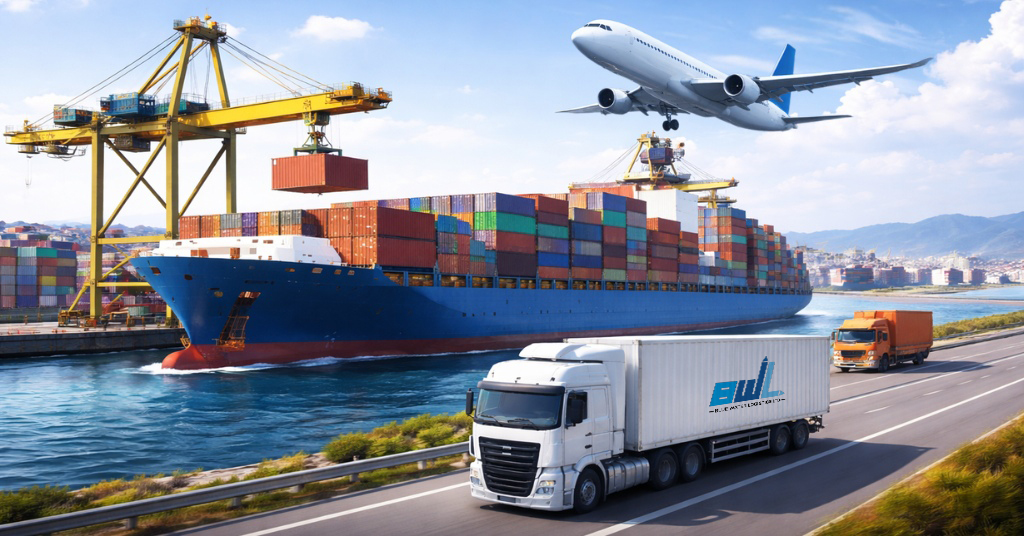
Sea, Air, or Road Freight: Choosing the Right Mode for Your Cargo In today’s fast-evolving global trade landscape, businesses are constantly balancing speed, cost, reliability, and flexibility in their supply chains. One of the most critical decisions exporters and importers face is selecting the right transportation mode for their cargo. Whether it is sea, air, or road freight, each mode offers distinct advantages depending on the nature of the shipment, timelines, and business priorities. Understanding how these freight options differ and when to use each can significantly improve operational efficiency, reduce costs, and ensure smoother cargo movement. This guide explores the key factors that help businesses make informed decisions when choosing between sea, air, and road freight. Understanding the Importance of Choosing the Right Freight Mode The right logistics strategy begins with selecting the most suitable transport mode. Many businesses often default to a familiar option without considering how the cargo’s characteristics, urgency, or destination can influence the choice. However, a well-planned multimodal approach can enhance supply chain resilience and flexibility. Choosing between sea, air, and road freight is not simply about transportation—it is about aligning logistics with business goals. The right decision can help maintain product quality, meet delivery commitments, and optimize overall costs. When Sea Freight Is the Best Option Sea freight remains the backbone of international trade, handling the majority of global cargo movement. It is particularly suitable for businesses that ship large volumes and prioritize cost efficiency over speed. Key Advantages of Sea Freight One of the primary benefits of sea freight is its ability to move bulk cargo economically. Whether through full container load (FCL) or less-than-container load (LCL), it offers flexibility for shipments of different sizes. This makes sea freight an ideal choice for manufacturers, exporters, and distributors managing large-scale operations. Sea freight is also well-suited for: Heavy and oversized cargo Industrial goods and raw materials Long-distance international shipments Non-urgent deliveries Additionally, ocean transportation supports sustainability goals by offering lower carbon emissions per ton compared to air freight. Considerations While cost-effective, sea freight involves longer transit times and requires detailed planning. Weather conditions, port congestion, and documentation processes can influence delivery timelines. Businesses must plan ahead to ensure supply continuity. When Air Freight Is the Right Choice In contrast to sea freight, air freight is designed for speed and precision. It is the preferred solution for time-sensitive cargo that must reach its destination quickly and securely. Key Advantages of Air Freight Air freight offers faster transit, making it ideal for industries such as pharmaceuticals, electronics, and high-value goods. It ensures minimal handling, reducing the risk of damage and enhancing cargo security. Air freight is especially effective for: Urgent shipments Perishable goods High-value or sensitive cargo Just-in-time inventory systems It also provides greater reliability in terms of scheduling and global connectivity, helping businesses maintain supply chain continuity. Considerations The primary limitation of air freight is cost. It is significantly more expensive than sea freight and has restrictions on weight and volume. Therefore, businesses must carefully assess whether speed justifies the higher expense. The Role of Road Freight in Logistics Road freight plays a critical role in both domestic and cross-border transportation. It connects ports, airports, warehouses, and final delivery locations, ensuring seamless cargo movement across the supply chain. Key Advantages of Road Freight One of the biggest strengths of road transport is flexibility. It supports door-to-door delivery and enables businesses to customize routes based on their operational needs. Road freight is ideal for: Short to medium distances Regional and domestic cargo First-mile and last-mile connectivity Cross-border movement in neighboring countries It also allows better control over schedules and enables real-time tracking and monitoring. Considerations Road freight may be influenced by traffic, infrastructure, regulatory conditions, and weather. Businesses must work with experienced logistics partners to optimize routing and minimize disruptions. Why Multimodal Logistics Is Becoming Essential As supply chains grow more complex, many businesses are adopting multimodal logistics strategies that combine sea, air, and road freight. This integrated approach provides greater flexibility and helps overcome limitations associated with relying on a single transport mode. For example, a shipment may travel by sea for cost efficiency, followed by road transportation for last-mile delivery. In urgent scenarios, air freight can be combined with road transport to accelerate timelines. Multimodal freight solutions enable businesses to: Balance cost and speed Improve supply chain resilience Reduce risk and dependency Enhance visibility and coordination This strategic integration has become a key differentiator in modern logistics. Factors to Consider When Choosing Between Sea, Air, and Road Freight Selecting the right mode depends on several critical factors. Businesses should evaluate: 1. Delivery Timeline Urgent shipments may require air freight, while flexible timelines support sea freight. 2. Cargo Type Perishable, hazardous, or sensitive cargo often demands specialized transport. 3. Cost Sensitivity Budget constraints influence the choice between speed and economy. 4. Volume and Weight Large shipments favor sea freight, while smaller loads may benefit from air or road. 5. Destination and Accessibility Remote or inland destinations often require road connectivity. 6. Risk and Security High-value goods may need faster and more secure transport. By carefully assessing these factors, businesses can make data-driven decisions that improve operational efficiency. How Expertise Enhances Freight Decisions While understanding these options is important, the real value lies in working with an experienced logistics partner who can evaluate requirements and recommend the most efficient strategy. Expert guidance ensures that cargo moves through the most suitable routes and modes, reducing delays and improving predictability. Blue Water Logistics Limited provides integrated sea, air, and road freight solutions, enabling businesses to choose the right mode based on cargo, urgency, and cost priorities. With global networks, regulatory expertise, and operational coordination, the company supports seamless cargo movement across international markets. Conclusion There is no single answer when it comes to choosing between sea, air, and road freight. The ideal solution depends on the shipment’s nature, urgency, and business objectives. By understanding the strengths of each mode and adopting a multimodal strategy, businesses can achieve
The Value of Great Logistics
The Value of Great Logistics What if logistics and spies shared the same paradox? The most effective spies aren’t the ones you notice – they’re the ones you never see. Logistics works the same way, for when it’s done right, it stays out of sight. At BWL Logistics, the true value of logistics management is not in how visible it is, but in how seamlessly it supports business operations. When shipments arrive on time, customs clearance happens without hold-ups, and supply chains remain predictable, logistics becomes something businesses no longer need to think about. That absence of concern is not accidental. It is the result of deep expertise and deliberate design. Most companies only notice logistics when something breaks. A delayed container, a documentation error, or a compliance issue can quickly interrupt production schedules and affect customer commitments. These moments make logistics suddenly very visible, often at the worst possible time. In contrast, efficient logistics works silently, ensuring that such disruptions never surface in the first place. This invisibility is built through anticipation rather than reaction. Successful logistics planning involves understanding regulations before they change, aligning documentation well ahead of shipment timelines, and coordinating every stakeholder involved in the movement of goods. When these elements come together, operations feel effortless, even though the systems behind them are highly complex. Smooth logistics operations also create tangible business advantages. They allow companies to plan inventory with confidence, manage costs more predictably, and scale without operational strain. Over time, this consistency strengthens supply chain efficiency and reduces risk across the entire organization. The result is not just the movement of goods, but momentum for the business itself. Trust plays a central role in this process. Businesses place trust in logistics partners who deliver the same dependable outcomes month after month. When logistics works without constant follow-ups or emergency interventions, teams are freed to focus on growth, strategy, and customer experience. Logistics shifts from being a transactional service to becoming a reliable extension of the business. True logistics expertise lies in handling complexity without passing it on to the client. Global trade involves regulatory changes, compliance requirements, fluctuating costs, and unpredictable external factors. A strong logistics partner absorbs these challenges and shields businesses from their impact. What clients experience is simplicity, clarity, and control. When logistics fail, the consequences are immediate and visible. Delays ripple through supply chains, costs rise, and operational confidence erodes. These moments highlight an important truth. Logistics is not merely a support function. It is a critical element of risk management and business continuity. Success in logistics should therefore be measured differently. It is not about how quickly problems are solved, but how effectively they are prevented. At BWL, our focus is on building resilient logistics systems that keep operations running smoothly and quietly, even in complex and changing environments. Because when logistics is done right, businesses do not notice it at all. They move forward with confidence, supported by systems that work silently in the background, exactly as they should. Get Started with BWL Today! Enquire Now
Export Process from India to the USA: A Step-by-Step Guide

Export Process from India to the USA: A Step-by-Step Guide Whether you’re a shipper/exporter feeling overwhelmed by U.S. compliance requirements, or a freight forwarder trying to make sense of the export process, this guide is for you. At BWL, we understand how complex international logistics can be — and we’re here to simplify it. In this blog, we break down the step-by-step export process from India to the United States, based on real-world logistics operations. Whether you’re a business owner, a logistics professional, or simply curious about the mechanics of global trade, this resource will help you navigate the journey with confidence and clarity. Step 1: Buyer Inquiry or Purchase Order The process begins when a supplier in India receives an enquiry or a purchase order from a buyer based in the United States. Step 2: Booking Confirmation Once the order is accepted, the supplier confirms the booking, typically by reserving space with a freight forwarder (such as BWL Ltd) or directly with a shipping line. Step 3: Freight Forwarder Coordination At this point, the supplier contacts a freight forwarder to manage the logistics and shipment arrangements. Step 4: Documentation Preparation The supplier provides the freight forwarder with the necessary shipping documents, including: Packing List Commercial Invoice Purchase Order Any applicable certificates (depending on the commodity) Step 5: Shipping Bill Generation A Shipping Bill is generated by a Customs House Agent (CHA), which is a crucial document for export clearance. Freight forwarders often assist with this process. (Don’t worry BWL has got you covered! We can be your CHA too) Step 6: Filing the Automated Manifest System (AMS) The Automated Manifest System (AMS) is filed by the shipping line or freight forwarder at least 24 hours before the cargo is loaded at the origin port. Note: AMS filing is a mandatory requirement by U.S. Customs. Non-compliance or late filing can result in penalties of up to $5,000. Step 7: Shipment Details Shared with Buyer The freight forwarder or supplier shares the full shipment details — including sailing schedule, container number, and tracking information — with the buyer. Step 8: Importer Security Filing (ISF) by Buyer The buyer (or the importer’s customs broker) in the USA must file an Importer Security Filing (ISF) — also known as “10+2” — at least 24 hours before loading. This helps U.S. Customs and Border Protection identify high-risk shipments. Step 9: Cargo Departs Once documentation is complete and clearance is obtained, the cargo is loaded on board the vessel and sails towards its destination port in the United States. Step 10: Bill of Lading Released The Bill of Lading (B/L) is issued by the carrier, serving as the official shipping document and evidence that goods have been loaded for export. This is shared with the buyer to begin the import clearance process at the destination. In short, exporting to the U.S. doesn’t have to be overwhelming — with the right knowledge and partners, it becomes a smooth process. BWL is here to support you every step of the way. Get Started with BWL Today! Enquire Now
What is Freight Forwarding? Benefits and How to Choose the Right One?
What Is Freight Forwarding? – Benefits & Types Do you want to transfer your goods safely? Freight forwarding services can help you. The principles of Freight forwarding are based on the effective and cost-effective transfer of merchandise that is kept in good shape all through its journey. What is freight forwarding? Why do you need it? Let’s know. 1. What is freight forwarding? Freight forwarding is the process of transporting goods from one location to another. Freight forwarders are responsible for arranging transportation and delivery of cargo, negotiating prices with carriers, and preparing documentation such as customs papers, bills of lading, and air waybills to comply with government regulations. To know more, visit our page. The freight forwarding industry has been growing in recent years due to several factors including: Increased global trade Expanded international supply chains Increased e-commerce sales What do Freight Forwarders do? Freight forwarders are responsible for handling, packing, and shipping cargo from a business’s warehouse to a destination country. They can also provide warehousing services for items that are not being shipped immediately. The service is often used when importing goods from overseas markets into a country with higher production costs like the United States. Why Freight Forwarding is Important? Now, we have understood What is freight forwarding? But, why is it important? Freight forwarding is important because it helps in the transport of goods from one place to another. It also helps in reducing the cost of transport and also reduces the time taken for transport. For your goods transfer, reach us. Freight forwarding is important because it helps in transporting goods from one place to another, reduces the cost of transport and also reduces the time taken for transport. Freight forwarding is a term used to describe the process of transporting goods from one location to another. Benefits of freight forwarding What is a freight forwarding and what benefits does it offer, let’s know. Freight forwarding is a service that provides door-to-door delivery of goods from one place to another. By combining the services of air cargo, ocean cargo, and rail, it provides an end-to-end supply chain for customers. Some of the benefits of a freight forwarder are: 1) It offers a door-to-door service 2) It can provide an end-to-end supply chain for customers 3) It offers flexible rates depending on the shipment 4) It saves time and money 5) It provides you freedom from signing up multiple contracts 6)The entire process provides you peace of mind which is unlikely if you try to handle it yourself. 7) They meet tight deadlines and handle unlikely circumstances well when it comes to the diversion of shipments. 8) They offer additional services too for affordable prices like warehouse storage, quick shipments and others. Types of Freight Forwarders and their Role Freight forwarding is the process of forwarding freight and cargo. A Freight forwarder is the one who takes care of the entire process, from pick-up to delivery. Freight Forwarders are the middlemen between shippers and carriers. There are many different types of freight forwarders, each with its specialization. The different types of freight forwarders include air freight, ocean freight, road freight, rail freight, trucking and warehousing. There are three types of freight forwarders: Air, Ocean and Land. The first two types of freight forwarders are responsible for moving goods by air or sea, while land freight forwarders are responsible for moving goods by land. Air Freight Forwarder: Air freight forwarders specialize in shipping cargo by air. They have to deal with all kinds of problems like delayed flights and lost luggage, which can lead to a lot of stress on their part. Ocean Freight Forwarder: Ocean freight forwarders specialize in shipping cargo by sea. They have to deal with all kinds of problems like delayed shipments and lost containers, which can lead to a lot of stress on their part. Land Freight Forwarder: Land freight forwarders specialize in shipping cargo by land. They have to deal with various restrictions and regulations for trucking, so they charge a higher fee for this service. Why Should You Choose a Freight Forwarder? A freight forwarder offers a variety of services such as storage, customs clearance, and warehousing. Freight forwarding companies can be used for personal or commercial purposes. For example, if you are moving overseas and need to ship your belongings, you can hire a freight forwarder to do it for you. Now Freight forwarders have many benefits over other types of shippers because they offer more services and expertise. They also have more experience with international shipping which is why they are often preferred by companies who need to move goods internationally. A Freight forwarder is responsible for the shipment and delivery of these goods. It is their responsibility to know about the regulations and requirements of both countries. They must also be aware of customs laws, import duties, and taxes. Choosing the right freight forwarder is a very important step in international shipping. If you want your goods delivered on time and without any damage, then you should hire a reliable freight forwarder. What services do freight forwarders provide? Essentially, freight forwarders can provide a variety of services along the supply chain. Some companies focus on ocean freight, and some provide air freight or get them both. Their service is dependent on your requirements. To get the right service, contact us. Some services that freight forwarders provide are: Export and Import customs clearance logments Intermodal transport options – from road, rail, air and sea HS Code Classification, import duties and taxes Verified Gross Mass Export Documentation International sea freight charges Agents/office networks in global countries Quarantine / Fumigation services Port service handling charges Marine insurance cover Trucking container deliveries from port to door Specialized cargo movements Other 3rd party services How to Pick the Right Freight Forwarder for Your Business Needs? Freight forwarding is a process of transporting goods from one location to another. It is a
Import from China to India – Get started today with BWL
Import from China to India – Get started today with BWL Introduction Over the last 6 years, Chinese imports to india have enhanced by 7.94%. In 2021, the nation’s trade with China will exceed $100 billion. The previous year, in 2020, India imported products worth $58.71 billion from China, a major nation’s biggest exporters. Following China were the United States of America with goods worth $26.89 billion and the United Arab Emirates with goods worth $23.96 billion. Reason for Importing Goods The reason for such high values is that importing goods from other countries to India bridges the gap between domestic production and supply, as well as consumer and demand preferences for a variety of products. Imports are essential to the economy since they enable a country to to provide its market with goods from other nations that are otherwise unavailable, scarce, expensive, or of low quality. One of the leading nations is an import from China to India. 3 Primary Advantages of importing Bringing new products to market Cost-cutting measures Developing into an industry leader Getting accessibility to high quality goods Some of the commonly imported products To name a few, the most commonly products that import from China to India are telecommunication instruments, electronic components, computer hardware, heavy machinery, organic chemicals and drug intermediates, consumer electronics, pharmaceuticals, furniture, and textiles. Iron ore, cotton, as well as other raw-material-based goods and services are among India’s most important exports to China. Multiple sectors in India, particularly the medical industry, rely heavily on Chinese products to produce instruments, medical tools, and machinery. India imports a lot of electrical and mechanical machinery, but also medical supplies imports have skyrocketed in the last two years. To get free consultancy on import from china, visit our website. Moreover, because of border disputes, bilateral commerce between the two countries has reduced by 15% since 2018. What are the top products in import from China to India? Electronic and telecommunications equipment According to the United Nations COMTRADE international trade database, electronic equipment was imported by India worth US$ 17.84 billion from China during 2020. Electronic goods, which also account for 32% of India’s total Chinese imports, are heavily reliant on Chinese suppliers. Moreover, because of border disputes, bilateral commerce between the two nations has reduced by 15% since 2018. Vehicle Components In 2019, China accounted for more than 25% of India’s auto part imports, totalling $4.2 billion. According to CAMAI-the Auto Component Manufacturers Association of India, these imports encompass engines and transmission parts (ACMA). Imported rims, front and rear spoilers, hubcaps, car lights, car sensors, rear view mirrors, and car cables are likewise popular import from China to India. Fuel tanks, helmets, mudguards, saddlebags & panniers, seats, and headlight assemblies are also popular on eBay. Nuclear Machinery Import from China to India of nuclear machinery was valued at $12.37 billion in 2020 and $13.87 billion in 2019. Nuclear reactors, boilers, and other types of nuclear machinery were also discovered in the United Nations COMTRADE database on international trade. Nuclear machinery import from China to India at a 35% share, followed by Germany at 8.26% and the United States at 6.35%. Medical Tools China imports nearly 11% of India’s medical products, devices, and tools. The vast majority of these medical devices range from simple tools like thermometers, and cotton wool, as well as ECG machines to catheters. Throughout the Covid-19 pandemic, critical medical supplies topped import from China to India to control the outbreak. Following the increase in Covid-19 cases in the nation, these N95 masks, and medical products included ventilators, as well as personal protective equipment (PPE). According to GlobalData, the Asia-Pacific ventilator market accounted for 12% of the Indian ventilator market. Despite the severely disrupted supply chain caused by the pandemic, this figure is expected to rise significantly in the coming years. Fertilizers To increase its chrome yield, India imports fertilisers like diammonium phosphate. Other fertilisers include urea, a plant nutrient that is popular amongst Indian farmers. The trade route is also important for Indian exports because China is India’s primary supplier of sulphur. Fertilisers worth US$1.67 billion in 2020 are import from China to India, based on the United Nations COMTRADE database on global trade. Following the Covid-19 pandemic, the supply of Chinese fertilisers in India was deemed critical. Its significance to the nation’s agricultural industry cannot be overstated. Iron & Steel Based on the United Nations COMTRADE database on global trade, India is expected to import $1.23 billion in steel and iron from China during 2020. Chinese steel imports encompass high-quality as well as high-grade ferroalloy goods, that are primarily used by Indian automobile as well as engineering goods manufacturers. JSW Group, one of India’s largest conglomerates, imports $400 million from China each year. A few of these goods are crucial parts of engines as well as electronic devices in India, where no domestic supply exists. Plastic & Electronic Toys The Chinese industry currently has a monopoly on the Indian toy market. India currently continues to import over $600 million in toy products from China, with famous items including plastic as well as electronic toys. Almost half of India’s domestic toy demand is met by import from China, which is the world leader in toy exports. When compared to toys domestically produced, the low-price level, variety, and accessibility of Chinese toys are significant selling points for both buyers and manufacturers, resulting in intense competition there in the toy market. Dairy Products Though India doesn’t quite import milk from China, a wide range of milk and dairy products are an import from China to India, including chocolate, food preparation products containing milk, skimmed milk powder, whey, whole milk powder, as well as lactose powder. Because of increased demand from importing nations, China’s milk production is rising by 20-25%. Whilst also India is the largest global milk producer, this is also the world’s largest consumer of milk, which also explains the rise in milk products in China’s imports. Different requirements to import from China to India The BIS Act was enacted to allow goods to be imported into India. Let us look at some of