
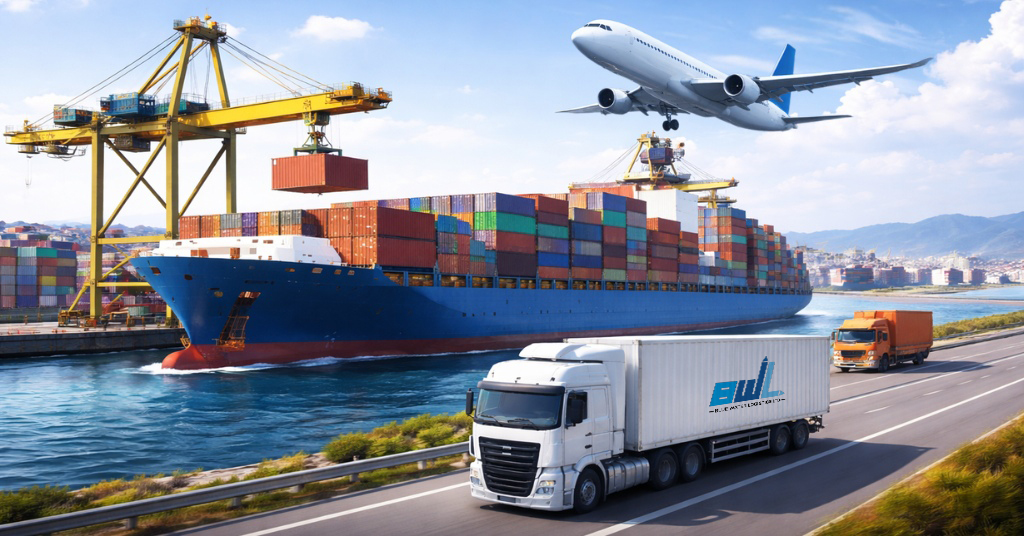
In today’s fast-evolving global trade landscape, businesses are constantly balancing speed, cost, reliability, and flexibility in their supply chains. One of the most critical decisions exporters and importers face is selecting the right transportation mode for their cargo. Whether it is sea, air, or road freight, each mode offers distinct advantages depending on the nature of the shipment, timelines, and business priorities.
Understanding how these freight options differ and when to use each can significantly improve operational efficiency, reduce costs, and ensure smoother cargo movement. This guide explores the key factors that help businesses make informed decisions when choosing between sea, air, and road freight.
The right logistics strategy begins with selecting the most suitable transport mode. Many businesses often default to a familiar option without considering how the cargo’s characteristics, urgency, or destination can influence the choice. However, a well-planned multimodal approach can enhance supply chain resilience and flexibility.
Choosing between sea, air, and road freight is not simply about transportation—it is about aligning logistics with business goals. The right decision can help maintain product quality, meet delivery commitments, and optimize overall costs.
Sea freight remains the backbone of international trade, handling the majority of global cargo movement. It is particularly suitable for businesses that ship large volumes and prioritize cost efficiency over speed.
One of the primary benefits of sea freight is its ability to move bulk cargo economically. Whether through full container load (FCL) or less-than-container load (LCL), it offers flexibility for shipments of different sizes. This makes sea freight an ideal choice for manufacturers, exporters, and distributors managing large-scale operations.
Sea freight is also well-suited for:
Additionally, ocean transportation supports sustainability goals by offering lower carbon emissions per ton compared to air freight.
While cost-effective, sea freight involves longer transit times and requires detailed planning. Weather conditions, port congestion, and documentation processes can influence delivery timelines. Businesses must plan ahead to ensure supply continuity.
In contrast to sea freight, air freight is designed for speed and precision. It is the preferred solution for time-sensitive cargo that must reach its destination quickly and securely.
Air freight offers faster transit, making it ideal for industries such as pharmaceuticals, electronics, and high-value goods. It ensures minimal handling, reducing the risk of damage and enhancing cargo security.
Air freight is especially effective for:
It also provides greater reliability in terms of scheduling and global connectivity, helping businesses maintain supply chain continuity.
The primary limitation of air freight is cost. It is significantly more expensive than sea freight and has restrictions on weight and volume. Therefore, businesses must carefully assess whether speed justifies the higher expense.
Road freight plays a critical role in both domestic and cross-border transportation. It connects ports, airports, warehouses, and final delivery locations, ensuring seamless cargo movement across the supply chain.
One of the biggest strengths of road transport is flexibility. It supports door-to-door delivery and enables businesses to customize routes based on their operational needs.
Road freight is ideal for:
It also allows better control over schedules and enables real-time tracking and monitoring.
Road freight may be influenced by traffic, infrastructure, regulatory conditions, and weather. Businesses must work with experienced logistics partners to optimize routing and minimize disruptions.
As supply chains grow more complex, many businesses are adopting multimodal logistics strategies that combine sea, air, and road freight. This integrated approach provides greater flexibility and helps overcome limitations associated with relying on a single transport mode.
For example, a shipment may travel by sea for cost efficiency, followed by road transportation for last-mile delivery. In urgent scenarios, air freight can be combined with road transport to accelerate timelines.
Multimodal freight solutions enable businesses to:
This strategic integration has become a key differentiator in modern logistics.
Selecting the right mode depends on several critical factors. Businesses should evaluate:
Urgent shipments may require air freight, while flexible timelines support sea freight.
Perishable, hazardous, or sensitive cargo often demands specialized transport.
Budget constraints influence the choice between speed and economy.
Large shipments favor sea freight, while smaller loads may benefit from air or road.
Remote or inland destinations often require road connectivity.
High-value goods may need faster and more secure transport.
By carefully assessing these factors, businesses can make data-driven decisions that improve operational efficiency.
While understanding these options is important, the real value lies in working with an experienced logistics partner who can evaluate requirements and recommend the most efficient strategy. Expert guidance ensures that cargo moves through the most suitable routes and modes, reducing delays and improving predictability.
Blue Water Logistics Limited provides integrated sea, air, and road freight solutions, enabling businesses to choose the right mode based on cargo, urgency, and cost priorities. With global networks, regulatory expertise, and operational coordination, the company supports seamless cargo movement across international markets.
There is no single answer when it comes to choosing between sea, air, and road freight. The ideal solution depends on the shipment’s nature, urgency, and business objectives. By understanding the strengths of each mode and adopting a multimodal strategy, businesses can achieve greater efficiency, reliability, and control.
As global trade continues to evolve, organizations that make informed logistics decisions will gain a competitive advantage. Selecting the right freight partner and transport mode is no longer just an operational choice, it is a strategic decision that shapes supply chain success.
BLUE WATER LOGISTICS LIMITED
(Formerly known as Blue Water Logistics Private Limited)
CIN No: L63030TG2022PLC165815
H NO.8-2-270/B/1/2, Block-3, 4th Floor Uptown Banjara, Road No.3, Banjara Hills, Hyderabad, Telangana, India, 500034
Interested in working with us?
info@bwl.co.in
Sales@bwl.co.in